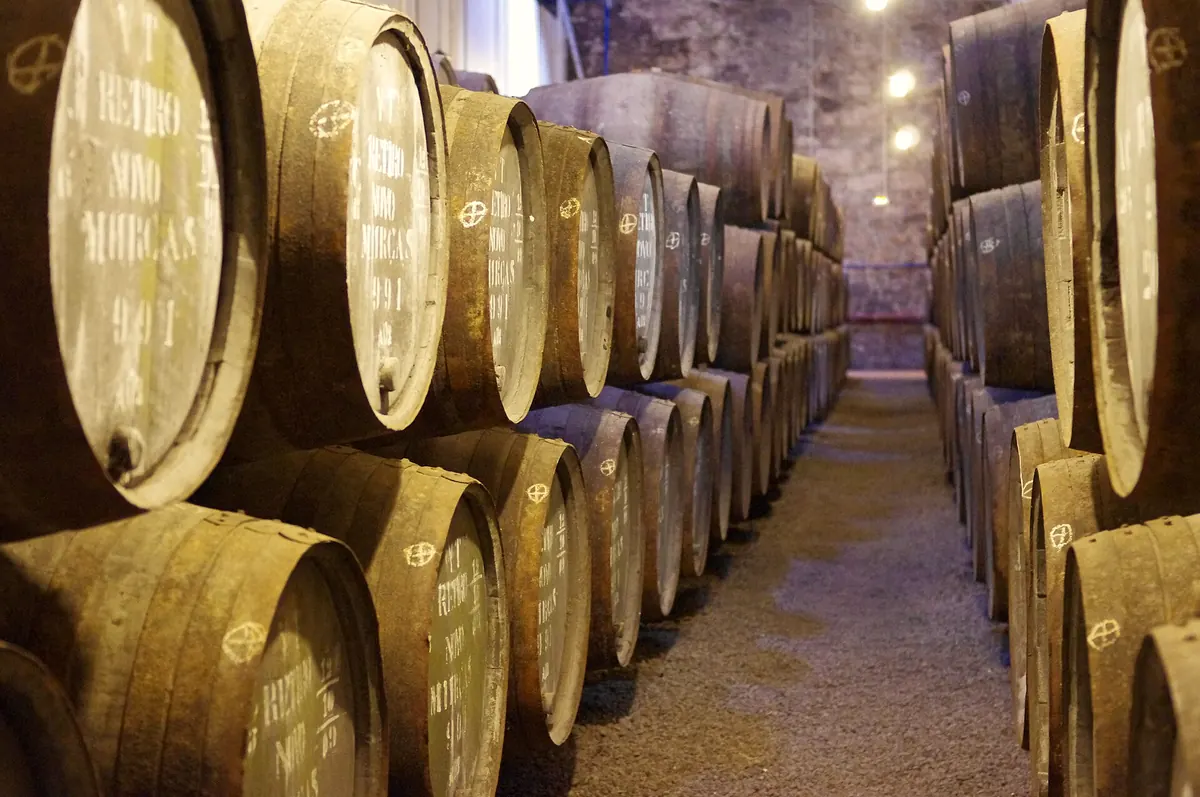
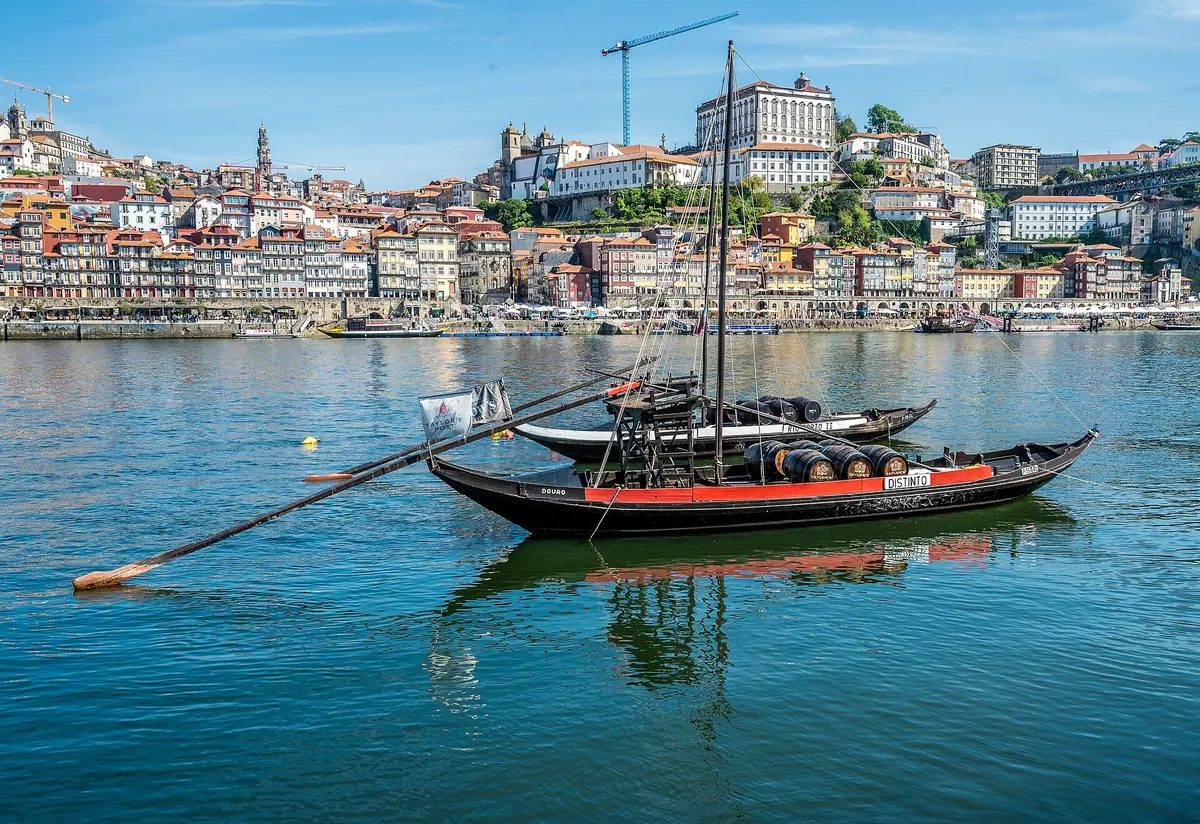
Walk across the lower deck of the Dom Luís I bridge and you are among them: long granite warehouses with the names of Port houses painted on their roofs. These are the lodges of Vila Nova de Gaia, where Port has aged in cask and vat for centuries before being shipped around the world. Visiting one — walking through the cool, dark aisles of barrels and then tasting side by side — is the single best way to understand Porto’s most famous export.
This guide explains how visits work, how to choose between them, and how to plan a Gaia afternoon that ends with dinner rather than a headache.
01Why Port lives in Gaia
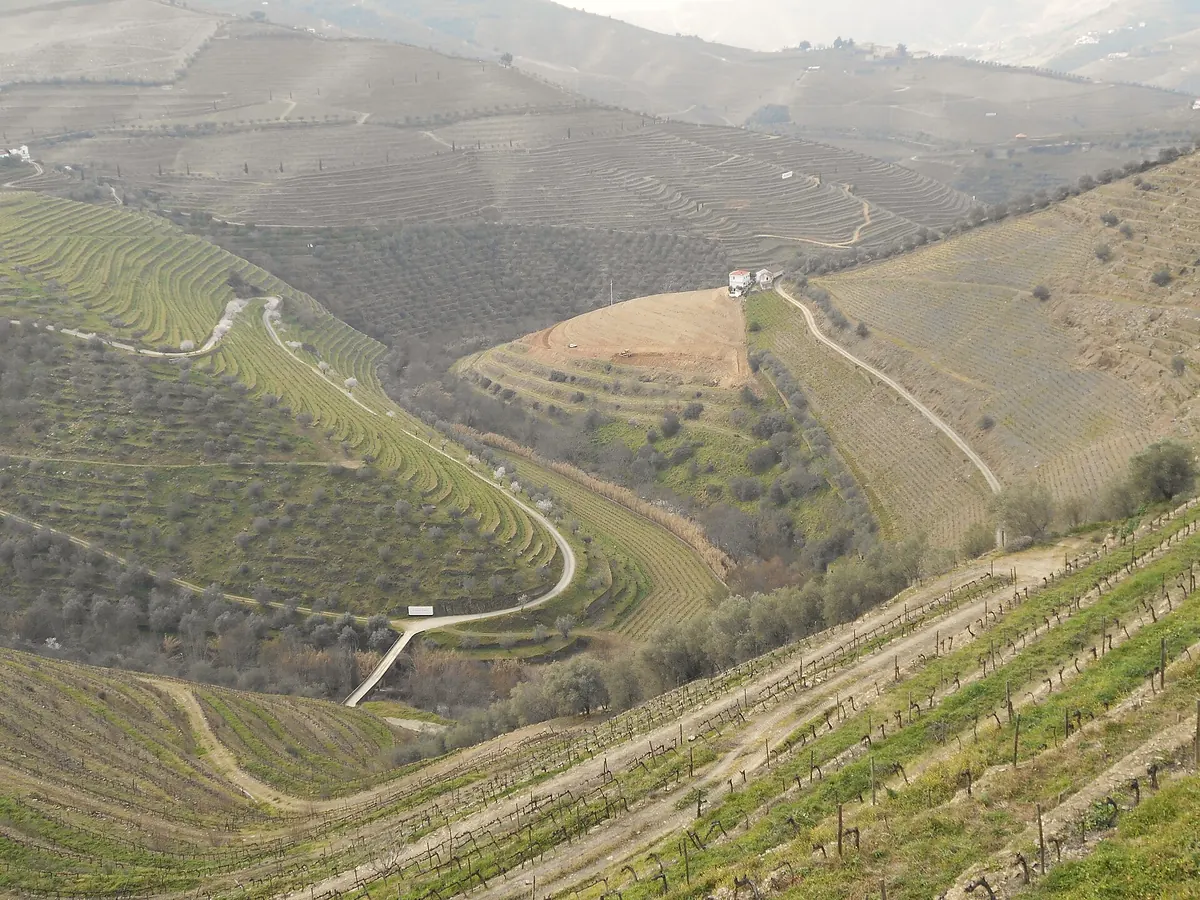
Port’s grapes grow more than 100 kilometres upriver, on the terraced slopes of the Alto Douro. For most of its history the young wine came down the river in flat-bottomed rabelo boats to Gaia, where the cooler, more humid riverside climate suited slow ageing, and where the shippers — many of them British — had their offices and quays.
The link was made official in 1926, when Gaia became the only place from which Port could be exported. That rule ended in 1986, and many producers now also age wine in the valley. But the historic lodges remain in Gaia, and so do the visitor centres.
02What a lodge visit includes
Most lodges offer a guided tour of 45–75 minutes followed by a tasting. A typical visit covers:
- The history of the house and the Douro region;
- How Port is made — harvest, foot-treading or mechanical treading, fortification with grape spirit;
- The ageing halls, with small casks for tawnies and large vats for rubies;
- A tasting, usually of two or three wines, at the end.
Premium options add older tawnies, single-harvest Colheitas or vintage Ports, sometimes paired with cheese or chocolate, in smaller groups. Tours run in several languages; check the schedule for yours.
If it is your first Port tasting, a standard tour is perfect. If you already know you like Port, the premium tasting is where the differences between styles become obvious — and where the visit becomes memorable.
03The styles you will taste
| Style | Character | Ageing |
|---|---|---|
| White | Fresh to rich; often served with tonic | Usually short ageing; some long-aged whites |
| Ruby / Reserve | Deep red, fruity, youthful | Mostly in large vats to preserve fruit |
| Tawny (10, 20, 30, 40 years) | Amber, nutty, dried fruit, caramel | Small casks; the age shown is an average |
| Colheita | A tawny from a single harvest year | Long cask ageing before bottling |
| LBV | Single-year ruby, more structured | Four to six years before bottling |
| Vintage | The finest declared years; powerful, long-lived | Short in cask, then decades in bottle |
A good tasting order goes from white to ruby to tawny, saving the oldest wine for last. Spit buckets are always acceptable — and wise if you are visiting more than one lodge.
04How to choose a lodge
- Big historic houses offer polished tours, museums and grand ageing halls. Excellent introductions; busier in summer.
- Smaller and family houses give more intimate visits and often more time with the guide.
- Location matters: the lodges by the river are easy to reach; some of the most atmospheric are a steep walk uphill from the waterfront.
- Read the inclusions: number of wines, whether there are food pairings, group size, and accessibility (many lodges have stairs and uneven floors).
We deliberately do not publish a “best lodge” ranking: tour quality depends on the guide, the group and the tasting tier, and it changes. Choose by style and format, book ahead in high season, and treat one excellent visit as better than three rushed ones.
05Planning your afternoon
Timing: tours run from mid-morning to early evening. A mid-afternoon slot lets you walk the waterfront afterwards and be at the Jardim do Morro viewpoint for sunset.
Getting there: walk across the lower deck of the Dom Luís I bridge from Ribeira (about ten minutes), take the Gaia cable car down from the upper level, or ride the metro to Jardim do Morro and walk down.
How many lodges: one or two. Port is strong, the tastings are generous, and the afternoon is better with time to walk.
Not the same day as the Douro: a valley day trip and a lodge tasting in one day is a lot of wine and a lot of transport. Keep them apart — see our 3-day itinerary.

06How to read a Port label
Port labels are more informative than they look, and once you know the vocabulary you can buy confidently anywhere.
- An age statement (10, 20, 30 or 40 Years Old) appears only on tawnies. It describes the style and average character of a blend, not the age of every drop in it.
- A single year means one harvest. On a Colheita the wine has aged in wood, and the bottling date is shown too. On a Vintage the wine spent only a short time in cask and is meant to evolve for years in the bottle. On an LBV (Late Bottled Vintage) it was bottled later than a Vintage, typically four to six years after the harvest, and is ready to drink sooner.
- Reserve on a ruby or tawny indicates a step up in quality and age from the basic style.
- The IVDP seal on the neck or capsule shows that the wine has been certified under the Port designation of origin.
An aged tawny is the easiest gift: ready to drink, forgiving and good for weeks after opening. A Vintage Port is a long-term project that needs cellaring, decanting and a crowd to finish it.
07Buying bottles and bringing them home
Lodge shops sell their full ranges, often including older wines that are hard to find abroad, and many will ship. If you are carrying bottles yourself, remember that liquids over 100 ml cannot go in hand luggage through most airport security checks; pack them in checked bags, wrapped in clothing or in a wine sleeve, or buy after security.
Travelling within the European Union, wine and Port for personal use move freely; EU guidance treats up to 20 litres of fortified “intermediate” products such as Port as clearly personal. Outside the EU, duty-free allowances depend on your destination country, so check them before you buy a case.
Serving it at home
- Serve white and tawny Port lightly chilled; ruby and Vintage at a cool room temperature.
- Decant Vintage Port and many unfiltered LBVs to remove the sediment.
- Once opened, rubies and tawnies keep for some weeks; a Vintage is best finished within a day or two.
08Comfort, accessibility and children
Lodges are cool, dim and often uneven underfoot: bring a layer even in August and wear flat shoes. Many have steps between halls; ask the lodge directly about step-free access if you need it, because the answer varies from building to building. Most houses welcome children on the tour and offer a soft drink at the tasting, but premium tastings are adults-only. Tastings are served in small measures, yet the wines are fortified, so eat before you go and drink water between glasses.
09Port at the table
Port is not only an after-dinner wine. In Porto you will see it used throughout the meal:
- White Port and tonic, over ice with a slice of orange or a sprig of mint, is the city’s favourite aperitif on a summer terrace.
- Tawny pairs naturally with nuts, dried fruit, caramel desserts and egg-based pastries — try it with a pastel de nata.
- Ruby and LBV are classic with dark chocolate and red-fruit desserts.
- Vintage Port deserves strong, mature cheese and a slow end to dinner.
10Three mistakes to avoid
- Tasting on an empty stomach. Have lunch first; Port is fortified, and the measures add up.
- Booking back-to-back lodges. Leave at least an hour between visits, or better, keep it to one.
- Skipping the guide’s questions. The best part of a tour is asking what the house is proud of; the answer often leads to the most interesting glass.
11Beyond the lodges
If the tasting leaves you curious, the next step is the Douro itself. A day upriver — by train, guided tour or car — shows you the terraced vineyards, the quintas where the grapes are grown and the landscape that UNESCO inscribed in 2001. Read our Douro Valley day trip guide.
QuestionsFrequently asked
Do I need to book port cellar tours in advance?
In spring, summer and early autumn, yes — popular time slots and premium tastings sell out. In winter you can often book the same day.
How long does a port cellar tour take?
Most guided visits with a tasting take 45–75 minutes. Premium tastings can run longer.
How many port lodges should I visit?
One or two. Port is fortified (around 19–22% alcohol), so a single good tasting is usually more enjoyable than several.
Are port cellar tours suitable for children?
Many lodges welcome children on the tour itself and offer juice instead of wine; check each lodge’s policy when booking.
First-hand slot: photography on this page is licensed from Wikimedia Commons (credited under each image) and is not our own trip photography. Add dated, on-the-ground notes and original photos here once an author has visited.